
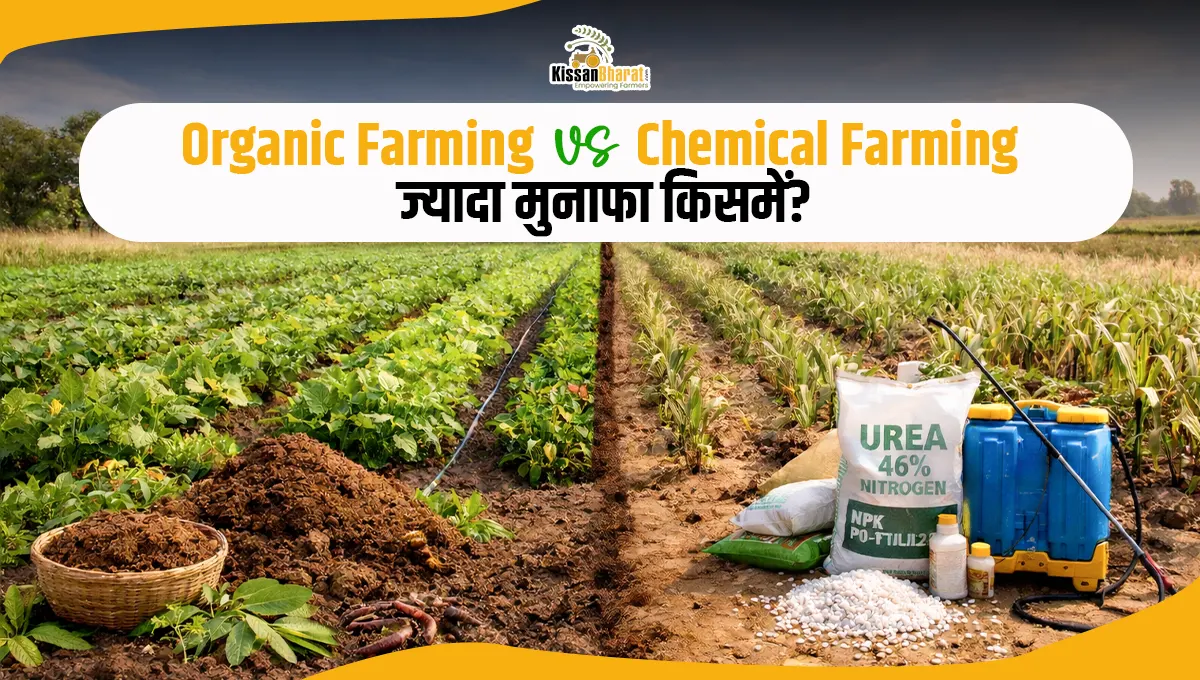
With rising input costs, soil health concerns, and growing demand for chemical-free food, farming is changing faster than ever, and many farmers are confused on one important thing: Organic Farming vs. Chemical Farming: Which Method Is Actually Better?
Both farming systems aim to produce high-quality crops, but they follow very different approaches.
Organic farming focuses on natural inputs and ecological balance, while chemical farming relies on synthetic fertilizers and pesticides to maximize yield. Understanding the difference between these two methods is essential for making smarter agricultural decisions.
In this guide, we’ll break down organic farming vs chemical farming, their advantages and challenges, and which approach works best in modern agriculture.
What is organic farming?
Organic farming is a form of agriculture that involves the use of natural and organic ways to cultivate crops. Organic farmers use techniques like composting, rotation, green manuring, and biological control to improve and maintain soil fertility.
The primary objective of organic farming is to create fertile and healthy soils and agricultural ecosystems. Organic farmers use materials like compost and animal waste to improve soil fertility. Organic materials enhance the structure and activity of microorganisms in the soil, thus increasing the longevity of crops.
Organic farming is advantageous because it maintains biodiversity. Organic farmers use techniques that help to control and attract beneficial insects in the agricultural environment. Organic farming has been found to improve the content of organic matter in the soil, thus increasing the health of agricultural lands.
What is chemical farming?
Chemical farming, also known as conventional farming, relies on the use of synthetic fertilizers, pesticides, and herbicides to increase crop yields and protect crops from insects and diseases. This farming technique gained popularity during the era of agricultural modernization when the need to produce more food became a global concern.
Chemical fertilizers contain vital nutrients like nitrogen, phosphorus, and potassium that are directly applied to the plants to promote their rapid growth and increase yields. Another synthetic product, pesticides, is used to control insects, weeds, and plant diseases effectively.
Chemical farming is capable of producing higher yields in a short period, and this is why it has been widely practiced on a large scale. However, overuse of chemicals can cause soil degradation and environmental problems.
Organic Farming vs Chemical Farming: Key Differences
When comparing organic farming vs chemical farming, the biggest differences lie in the inputs used, environmental impact, and long-term sustainability.
Organic farming practices include the use of organic fertilizers, green manure, and biological control. On the other hand, in chemical farming, synthetic chemicals are used to promote healthy growth and to control pests at a faster rate.
Another important difference is soil management. Organic farming focuses on improving soil health through crop rotation and natural nutrient cycles, while chemical farming often prioritizes immediate productivity.
Environmental impact also varies. Organic farming tends to support biodiversity and reduce pollution, while heavy chemical use may affect soil quality and water systems over time.
Advantages of Organic Farming
Organic farming has several long-term advantages for sustainable farming. One of the most important advantages of organic farming is the improvement in soil quality, as organic matter enhances microbial activities and soil fertility.
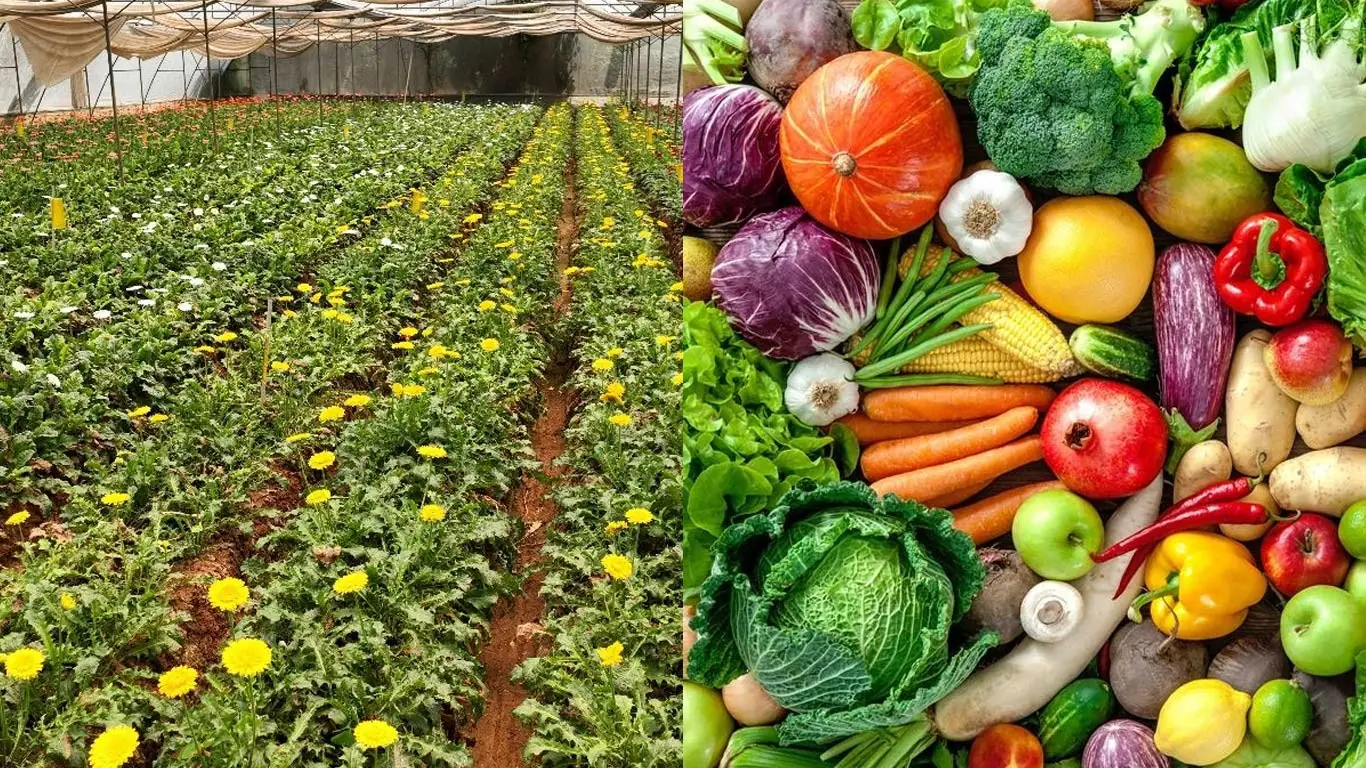
Organic farming also helps minimize exposure to chemicals for farmers and consumers, which is why the demand for organic vegetables has been steadily increasing. Another important advantage of organic farming is that it is environmentally sustainable. Organic farming does not use synthetic chemicals, which helps conserve soil, water, and biodiversity.
While organic farming might have slightly lower productivity during the initial period, research indicates that organic farming can be as productive as conventional farming practices while having better soil systems.
Advantages of Chemical Farming
Chemical farming also has several advantages, especially when it comes to large-scale farming. The most important advantage is the increased short-term crop production, which helps in addressing the rising food demand.
Synthetic fertilizers allow plants to access nutrients directly, which enables them to grow faster and produce more. Chemical pesticides also offer a quick solution to controlling pests and diseases, which helps prevent crop loss.
Another advantage is the efficiency that comes with modern farming equipment and chemical farming. This approach enables farmers to handle larger farmlands with minimal labor. For many farmers, this approach is an effective means of ensuring consistent crop production while preventing crop loss.
The Future of Farming: A Balanced Approach
The debate around organic farming vs chemical farming does not always have a simple answer. In many cases, the most effective approach lies somewhere in between.
Modern agriculture is increasingly adopting integrated farming systems, in which natural methods are being supplemented with some chemical components to ensure maximum productivity and sustainability.
New agricultural innovations such as precision farming, biofertilizers, smart irrigation, etc., are also being introduced to reduce dependence on chemicals in a more efficient manner.
Organizations like Food and Agriculture Organization and Indian Council of Agricultural Research emphasize sustainable farming practices that protect soil health while maintaining food production.
Conclusion
Choosing between organic farming vs chemical farming depends on many factors, including farm size, resources, and long-term agricultural goals.
Organic farming practices emphasize sustainability and soil conservation, whereas chemical farming emphasizes increased productivity and efficiency.
Rather than considering these two approaches as opposites, it is now being recommended that farmers practice harmonious farming by integrating modern agricultural technology with environmentally sound approaches.