
.webp)
Kharif की फसल कट रही है और अगला काम है Rabi season की तैयारी। October–November का महीना गेहूँ (Wheat) और सरसों (Mustard) के किसानों के लिए सबसे critical period है। बुवाई से पहले खेत की सही तैयारी, deep ploughing, stubble management, soil testing, FYM, levelling और seed bed, यह सब Rabi yield का foundation है।
ICAR के अनुसार गेहूँ में proper tillage और seed bed preparation से yield 15–20% तक बढ़ सकती है। Punjab Agricultural University (PAU) की research बताती है कि late sowing और खराब seed bed मिलकर yield में 30–35 kg/day तक की कमी करते हैं, इसलिए खेत की तैयारी में कोई compromise नहीं।
Kharif फसल कटाई 2026 — सही समय और post-harvest guide
Rabi 2026-27 Sowing Calendar: Deadline याद रखें
|
|
|
|
|
|
|
|
|
|
|
|
|
|
|
|
|
|
|
|
|
|
|
|
|
|
|
|
⚠️ सरसों की बुवाई गेहूँ से पहले होती है — September के आखिर से October में। अगर आपने सरसों भी लगानी है तो वो खेत अभी से तैयार करें। गेहूँ का खेत October से।
Step 1: Stubble और Crop Residue Management: पहला और सबसे ज़रूरी काम
Kharif की फसल कटने के बाद खेत में stubble (नरवाई/ठूँठ) बच जाता है, इसे जलाना सबसे बड़ी गलती है।
पराली/Stubble जलाने के नुकसान:
- मिट्टी के beneficial bacteria और earthworms नष्ट होते हैं
- Soil organic carbon 40–60% कम होती है
- Air pollution — legal action का risk
- Punjab और Haryana में पराली जलाने पर fine और subsidy block हो सकती है
Stubble के बेहतर options:
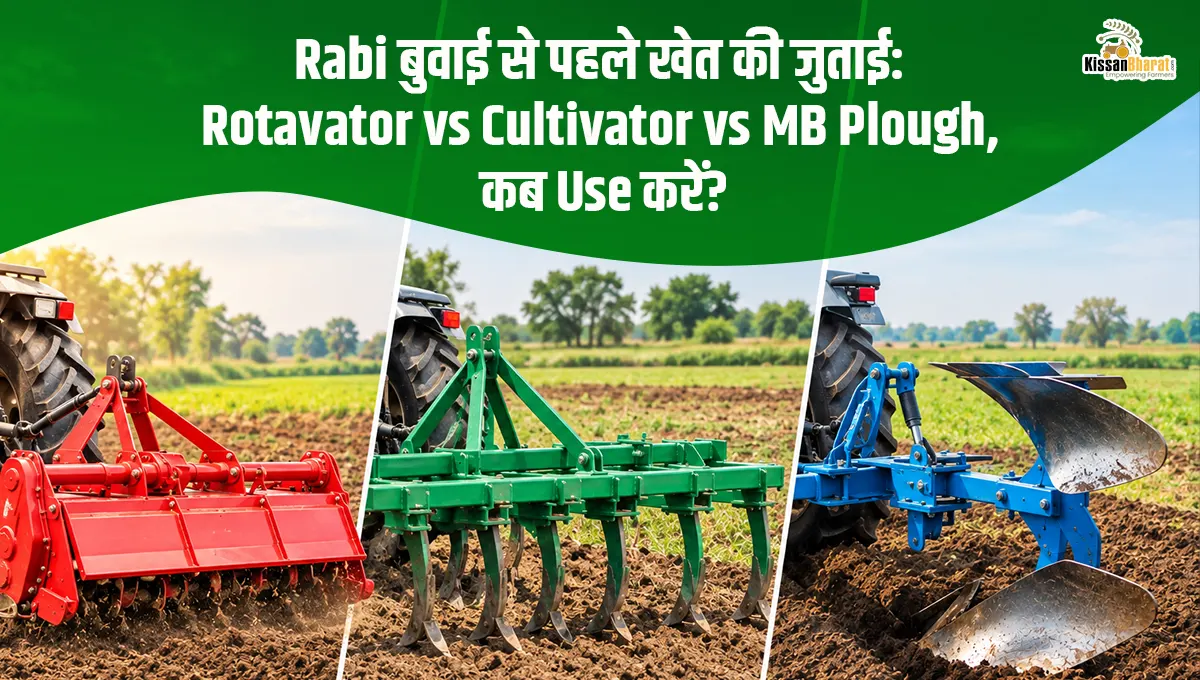
Option 1 — Rotavator से soil में incorporate करें:
Rotavator से 2–3 rounds में stubble को मिट्टी में mix करें। यह organic matter बनता है जो अगले season तक decompose होकर natural fertilizer बन जाता है।
Option 2 — Happy Seeder से directly बुवाई:
Happy Seeder खड़े stubble में बीज डालती है — न जलाना, न Rotavator। Punjab सरकार Happy Seeder पर subsidy देती है। Zero tillage wheat seeding के साथ stubble mulch रहता है।
Option 3 — Baler से गठ्ठर बनाएं:
Baler से stubble के गठ्ठर बनाएं — dairy farms और biomass plants को बेचें। ₹500–1,200/acre की extra income।
Step 2: Soil Testing: बुवाई से पहले ज़रूरी है
Rabi season की शुरुआत Soil Health Card से करें। बिना soil test के fertilizer डालना अंधेरे में तीर चलाना है।
Soil testing से क्या पता चलता है:
- pH — गेहूँ के लिए ideal 6.5–7.5
- N, P, K की actual status — कहाँ कमी है, कहाँ excess
- Micronutrients — Zinc, Iron, Boron
- Organic Carbon — soil की health indicator
Rabi में most common problems:
- Zinc deficiency: North India की 70%+ soils में — गेहूँ में yellow-brown interveinal chlorosis। ZnSO₄ @ 25 kg/ha basal में।
- Alkaline pH (8+): Gypsum या elemental sulphur से correct करें
- Low Organic Carbon: FYM और green manure से improve करें
Soil Health Card 2026 — free apply करें और results पढ़ें
Step 3: Deep Ploughing: Rabi की नींव
Kharif फसल के बाद खेत की मिट्टी compact हो जाती है — deep ploughing से यह loose होती है और roots को गहराई तक जाने की जगह मिलती है।
Deep Ploughing कैसे करें:
Plough (मोल्डबोर्ड/डिस्क) से 20–25 cm गहरी जुताई करें। गेहूँ के लिए यह हर 3–4 साल में एक बार ज़रूर होनी चाहिए — continuous shallow tillage से hard pan बनती है।
Deep ploughing के फायदे:
- Hard pan टूटती है — root penetration बेहतर
- Soil aeration बढ़ती है
- Weed seeds deep bury होते हैं — अगले season में कम उगते हैं
- Soil moisture retention बेहतर होती है
- Soil-borne diseases और pests कम होते हैं
💡 Deep ploughing हमेशा Kharif कटाई के बाद जब भी soil में थोड़ी moisture हो तब करें — dry soil में deep ploughing से clods बड़े बनते हैं जो बाद में तोड़ने पड़ते हैं।
Step 4: FYM और Organic Matter: मिट्टी की सेहत बनाएं
Chemical fertilizer से पहले FYM (Farm Yard Manure) या Compost ज़रूर डालें।
FYM application:
- Well-decomposed FYM @ 10–15 tonnes/hectare
- Vermicompost @ 4–5 tonnes/hectare — FYM से ज़्यादा effective
- Deep ploughing से पहले field में spread करें ताकि soil में अच्छे से mix हो
Biofertilizers भी add करें:
- Trichoderma viride @ 2.5 kg/ha (FYM के साथ mix करके) — soil-borne diseases से बचाव
- PSB (Phosphate Solubilizing Bacteria) — phosphorus uptake 20–30% बेहतर होती है
- Azotobacter — गेहूँ के लिए N fixation
जैविक खेती शुरू करने का guide — soil health और organic approach
Step 5: Field Levelling: पानी की बचत और uniform germination
Uneven field में पानी कहीं ज़्यादा, कहीं कम जाता है — germination uneven होती है और yield गिरती है।
Levelling के options:
Harrow से light levelling — clods तोड़ना और surface smooth करना।
Laser Land Levelling (सबसे best option):
- ±2 cm accuracy से field level होती है
- पानी की बचत 20–25% — irrigation zyada uniform
- Fertilizer efficiency बढ़ती है
- Punjab, Haryana और UP में SMAM scheme से subsidy available है
ICAR research के अनुसार laser-levelled field में गेहूँ की yield 7–8% और irrigation water saving 25% तक होती है।
Step 6: Seed Bed Preparation: Crop-wise अलग तरीका
गेहूँ के लिए Seed Bed
गेहूँ के लिए fine और firm seed bed चाहिए — बहुत loose नहीं, बहुत compact नहीं।
Process:
- Deep ploughing के बाद 2–3 दिन छोड़ें — clods थोड़े dry हों
- Rotavator से 2 rounds — clods बारीक करें
- Harrow से surface smooth करें
- Optional: Planker से levelling और packing
Test: अच्छे seed bed की पहचान — मुट्ठी भर मिट्टी लें और 1 मीटर ऊपर से गिराएं। अगर 50% से ज़्यादा clods टूट जाएं — seed bed ready है।
सरसों के लिए Seed Bed
सरसों के seeds बहुत छोटे होते हैं — seed bed extra fine होना चाहिए, depth 1–1.5 cm से ज़्यादा नहीं।
Process:
- Paddy/Kharif कटाई के तुरंत बाद — September आखिर में शुरू करें
- Cultivator से 2 rounds — 8–10 cm depth
- Harrow से clods तोड़ें
- Planker से surface flatten करें — सरसों के छोटे seeds के लिए critical
सरसों में poor seed bed से germination 30–40% कम हो सकती है — इसलिए extra attention दें।
Step 7: Pre-Sowing Irrigation (Palewa): Rabi का पहला पानी
खेत तैयार होने के बाद बुवाई से पहले एक irrigation देना — "palewa" — गेहूँ के लिए बहुत ज़रूरी है।
Palewa क्यों:
- Soil moisture uniform होती है — germination 90%+ होती है
- Seeds को germinate होने के लिए adequate moisture मिलती है
- Weed seeds surface पर आते हैं और soil preparation से नष्ट होते हैं
Palewa timing:
- गेहूँ: Palewa दें, 5–7 दिन बाद जब soil "vatar" (right moisture) में हो — बुवाई करें
- सरसों: Palewa optional है — अगर soil में moisture है तो सीधे बुवाई। Dry soil में light irrigation के बाद बुवाई।
Drip Irrigation Subsidy 2026 — Rabi season में water-efficient irrigation
Step 8: Basal Fertilizer: बुवाई के साथ
Seed bed ready होने के बाद बुवाई के समय basal fertilizer:
गेहूँ (per hectare, ICAR recommendations):
- DAP (18-46-0) @ 130 kg — phosphorus और starter nitrogen
- MOP @ 67 kg — potassium (अगर soil test में K कम हो)
- ZnSO₄ @ 25 kg — Zinc की कमी हो तो
- Urea split में — बुवाई के 7–10 दिन बाद first irrigation के साथ पहली dose
सरसों (per hectare):
- DAP @ 100 kg — basal में
- Urea @ 50 kg — basal में (half), rest topdressing में
- Sulphur @ 20 kg (as Gypsum) — सरसों में sulphur critical है
खरीफ में Urea, DAP और NPK — dose और timing की पूरी guide
Step 9: Variety Selection: Sowing से पहले तय करें
गेहूँ — Recommended Varieties 2026-27:
|
|
|
|
|
|
|
|
|
|
|
|
|
|
|
|
|
|
|
|
|
|
|
|
|
|
|
|
|
सरसों — Recommended Varieties:
|
|
|
|
|
|
|
|
|
|
|
|
|
|
|
|
|
|
|
|
|
|
|
|
|
Step 10: Buwai: Seed Drill से Uniform Sowing
सबसे आखिरी लेकिन सबसे महत्वपूर्ण step।
गेहूँ:
- Seed rate: 100–125 kg/ha (timely sowing), 125–150 kg/ha (late sowing)
- Depth: 5–6 cm
- Row spacing: 20–22.5 cm
- Seed Drill से uniform sowing — manual broadcasting से yield 15–20% ज़्यादा
सरसों:
- Seed rate: 4–5 kg/ha
- Depth: 2–3 cm — बहुत गहरी बुवाई से germination fail
- Row spacing: 45–50 cm
- Seed Drill से या dibbling method
Seed treatment — बुवाई से पहले ज़रूरी:
- Thiram @ 2.5 gm/kg — fungal disease से protection
- Imidacloprid 70 WS @ 7.5 gm/kg — soil insects से
- Azotobacter (गेहूँ) + PSB (दोनों) — biofertilizer treatment
Seed Drill vs Manual Sowing: Cost & Yield Comparison
निष्कर्ष
Rabi 2026-27 में गेहूँ और सरसों की bumper yield का रास्ता खेत की तैयारी से शुरू होता है। Stubble management → Soil testing → Deep ploughing → FYM → Levelling → Seed bed → Palewa → Basal fertilizer → Seed Drill से बुवाई — यह 10 steps in sequence follow करें।
सबसे important deadline: सरसों — October 15 तक, गेहूँ — November 10 तक। इससे बाद sowing के लिए late varieties choose करें