
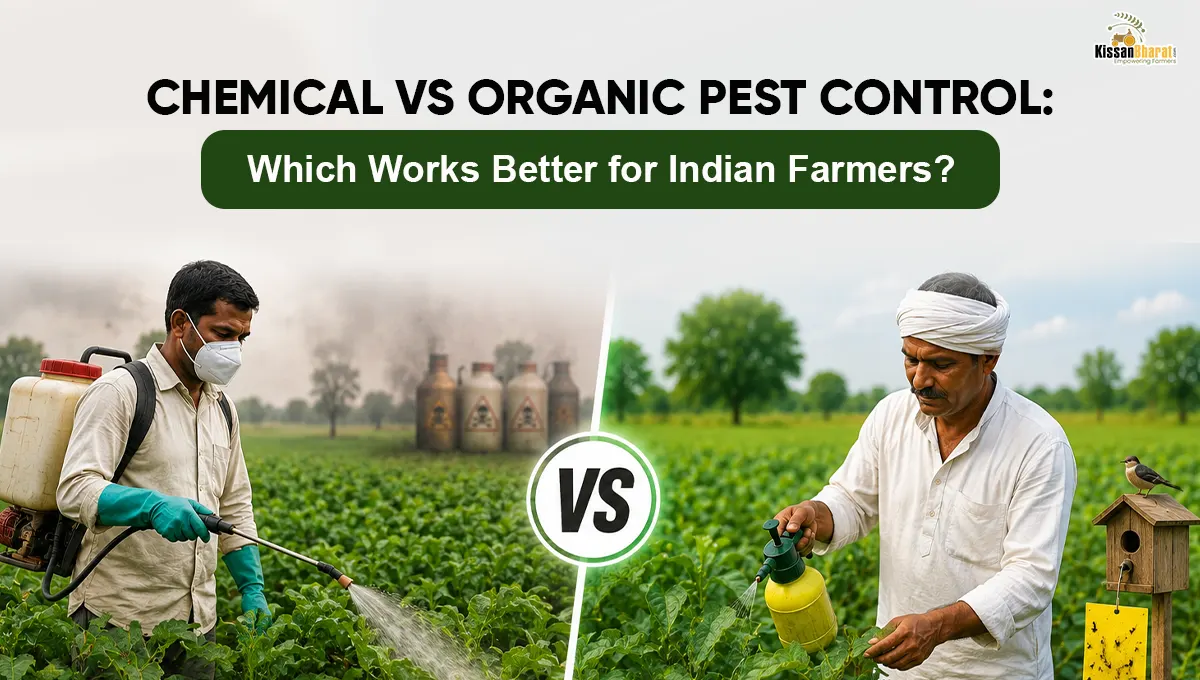
यह सवाल आज हर progressive farmer के मन में है: chemical pesticide से काम तेज़ होता है, लेकिन organic safer है। तो best pesticide कौन सा है?
The honest answer: दोनों के अपने use cases हैं, और जो किसान दोनों को समझकर सही वक्त पर सही option चुनता है, वही सबसे ज़्यादा फायदे में रहता है।
India में chemical pesticide consumption FY2023 में ~5.25 लाख tonnes था, जबकि biopesticides अभी total pesticide usage का सिर्फ 10–12% हिस्सा हैं। लेकिन यह share तेज़ी से बदल रहा है: India biopesticides market 2025 में USD 247 million का था और 2033 तक 10.2% CAGR से grow करके USD 537 million तक पहुँचने का अनुमान है।
यह बदलाव क्यों हो रहा है और आपको इससे क्या सीखना चाहिए, यही इस blog का core है।
Kharif Crop Pest Control: Paddy, Cotton और Maize के लिए complete guide
Chemical और Organic Pesticide क्या होते हैं?
Chemical Pesticides (Synthetic Pesticides): Synthetically manufactured compounds जो specific pest को तेज़ और broad-spectrum तरीके से kill करते हैं। Examples: Chlorpyriphos, Imidacloprid, Cypermethrin, Profenophos, Mancozeb।
Organic / Bio Pesticides (Biopesticides): Natural sources, microorganisms, plants, minerals से derived pest control agents। Biopesticides में microbial insecticides, fungicides, nematicides और biochemical products जैसे pheromones और plant growth regulators शामिल हैं जो CIBRC guidelines के तहत registered होते हैं। Examples: Trichoderma, Beauveria bassiana, Neem oil, NPV, Spinosad।
|
|
|
|
|
|
|
|
|
|
|
|
|
|
|
|
|
|
|
|
|
|
|
|
|
|
|
|
|
|
|
|
|
|
|
|
Chemical Pesticides कब Best हैं?
Chemical pesticides का अपना एक legitimate और important role है। इन्हें completely बुरा नहीं कहा जा सकता लेकिन इनका misuse ही असली problem है।
Chemical pesticides best हैं जब:
- Heavy infestation हो और ETL cross हो चुकी हो, जैसे paddy में Hopper Burn शुरू हो गया हो
- Time-sensitive emergency हो, monsoon में FAW का sudden attack, जहाँ 24-48 घंटे में action ज़रूरी हो
- Systemic action चाहिए हो, जैसे soil-borne disease के लिए systemic fungicide
- Large commercial farming जहाँ cost per acre को strict control में रखना हो
Chemical pesticides के risks:
- Resistance development: पुरानी chemistries जैसे organochlorines में resistance develop हो चुकी है—इसीलिए diamides जैसे targeted solutions की तरफ shift हो रहा है।
- Natural enemy destruction: Early-season broad-spectrum spray से Trichogramma, lady beetles और spiders नष्ट होते हैं जो natural pest regulation करते हैं
- Food residue: Export के लिए MRL (Maximum Residue Limit) violation — buyers reject करते हैं
- Health impact: Farmer exposure — Punjab में pesticide-linked health issues documented हैं
Organic / Biopesticides कब Best हैं?
ICAR की study के अनुसार, अभी सिर्फ 10–15% Indian farmers biopesticides के बारे में जानते हैं। यह knowledge gap ही किसानों को नुकसान में रखता है क्योंकि सही जगह biopesticide use करने पर chemical से कम खर्च में बेहतर long-term result मिल सकता है।
Biopesticides best हैं जब:
- Early-stage infestation हो, ETL cross होने से पहले preventive use
- Export-quality produce चाहिए हो—EU, US markets में strict MRL norms हैं
- Beneficial insects protect करने हों—pollinators और natural enemies बचाने के लिए
- Soil health long-term build करनी हो — Trichoderma से soil beneficial microbiome बढ़ता है
कब Chemical, कब Organic — Decision Framework
|
|
|
|
|
|
|
|
|
|
|
|
|
|
|
|
|
|
|
|
|
|
|
|
💡 Golden Rule: Biopesticide preventive, Chemical curative। Season की शुरुआत में biopesticide से healthy foundation बनाएं, ETL cross होने पर targeted chemical use करें।
IPM ही Best Pesticide Strategy है
Chemical और organic: यह binary choice नहीं है।
India का pesticide market एक paradigm shift में है — precision solutions जैसे diamides और biopesticides दोनों की combined demand बढ़ रही है। सबसे successful farmers वो हैं जो IPM (Integrated Pest Management) follow करते हैं:
- Prevention: Resistant varieties + crop rotation + deep ploughing (Cultural control)
- Monitoring: Weekly scouting + pheromone traps (know your ETL)
- Biological first: Trichogramma, NPV, Beauveria, Neem oil
- Chemical last resort: ETL cross होने पर, सही molecule, सही dose, सही timing
India में domestic manufacturing base की वजह से microbial biopesticides की production cost specific pest targets के लिए chemical pesticides से काफी कम हो गई है। यानी biopesticide vs chemical का cost argument भी धीरे-धीरे बदल रहा है।
Organic Farming vs Chemical Farming — soil और income दोनों पर impact
निष्कर्ष
Best pesticide वो है जो सही pest पर, सही stage पर, सही dose में use हो।
Heavy infestation में chemical का कोई विकल्प नहीं, लेकिन season भर chemical spray करते रहना soil, health और wallet तीनों के लिए नुकसानदेह है। PKVY scheme के तहत government biopesticides पर subsidized access दे रही है—इसका फायदा उठाएं और IPM-based approach अपनाएं।
Kharif season में crop-specific ETL और chemical doses के लिए Kharif Pest Control complete guide यहाँ पढ़ें। Soil health बेहतर रखने के लिए Soil Health Card से free testing करवाएं — healthy soil में pest pressure naturally कम होता है।
FAQs
Q: क्या biopesticide chemical pesticide जितना effective है?
A: Early-stage infestation और preventive use में बिल्कुल—Bt, NPV और Spinosad तो कुछ pests पर chemical से ज़्यादा specific और effective हैं। Heavy infestation में chemical faster action देता है। Targeted diamides और biopesticides का combination best results देता है। यानी answer है: situational — pest की stage और severity पर depend करता है।
Q: Paddy के लिए best biopesticide कौन सा है?
A: Stem borer के लिए Trichogramma japonicum cards (egg parasitoid) + Bt spray; Leaf folder के लिए Neem oil/NSKE; Brown Plant Hopper के लिए field drainage + neem extract (ETL cross होने पर chemical)। Rice Blast के लिए Trichoderma harzianum seed treatment preventive use में excellent है।
Q: Cotton में organic pesticide से Pink Bollworm control हो सकती है?
A: Biopesticides का adoption export-driven crops जैसे cotton में तेज़ी से बढ़ रहा है। Pheromone traps से early detection + NPV spray + rosette flower removal — यह combination ETL से नीचे रखने में effective है। But बोll के अंदर larvae चली जाए तो chemical (Emamectin Benzoate) ज़रूरी है।
Q: Biopesticide कहाँ से खरीदें — India में कौन से brands reliable हैं?
A: IARI, ICAR और SAU के empanelled manufacturers से खरीदें। Reliable brands: Multiplex (Trichoderma, Beauveria), T-Stanes (Bt, NPV), Biostadt, Dhanuka Bioscience। खरीदते समय CIBRC registration number, manufacturing date और CFU count ज़रूर check करें।
Q: Biopesticide और chemical को साथ mix करके spray कर सकते हैं?
A: Generally नहीं — chemical pesticide का pH biopesticide के living organisms को kill कर देता है। दोनों अलग-अलग spray करें, कम से कम 3–5 दिन का gap रखें। Exception: Spinosad और कुछ botanical pesticides कुछ chemicals के साथ compatible हैं — label पर compatibility check करें।

.webp)
.webp)