
Modern agriculture has become more efficient with the help of advanced and smart farming equipment. Two of the most commonly used implements attached to a farm tractor are the rotavator and the cultivator. Both play an important role in land preparation, but farmers often wonder which one is more useful for their farming needs.
Understanding the difference between these two tools is important because choosing the right equipment can improve soil conditions, save time, reduce labour requirements, and increase field productivity. In this article, we’ll compare rotavator vs cultivator, explain how each works, discuss their benefits, and help farmers decide which implement is better suited to their farming operations.
What Is a Rotavator?
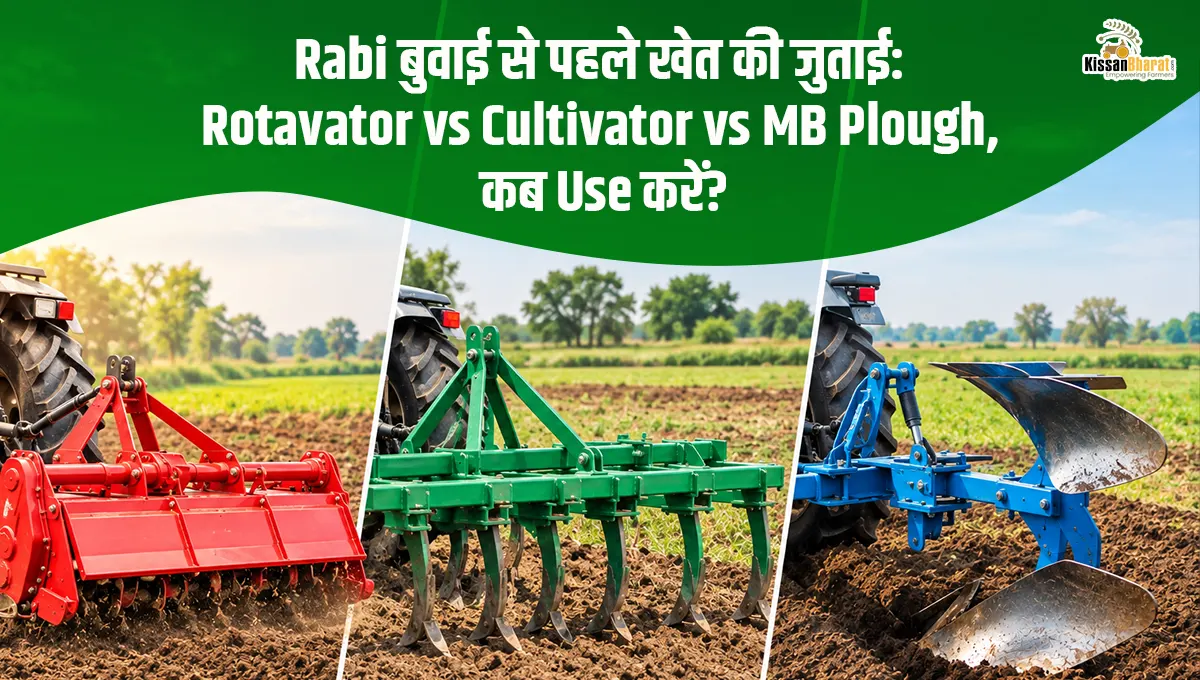
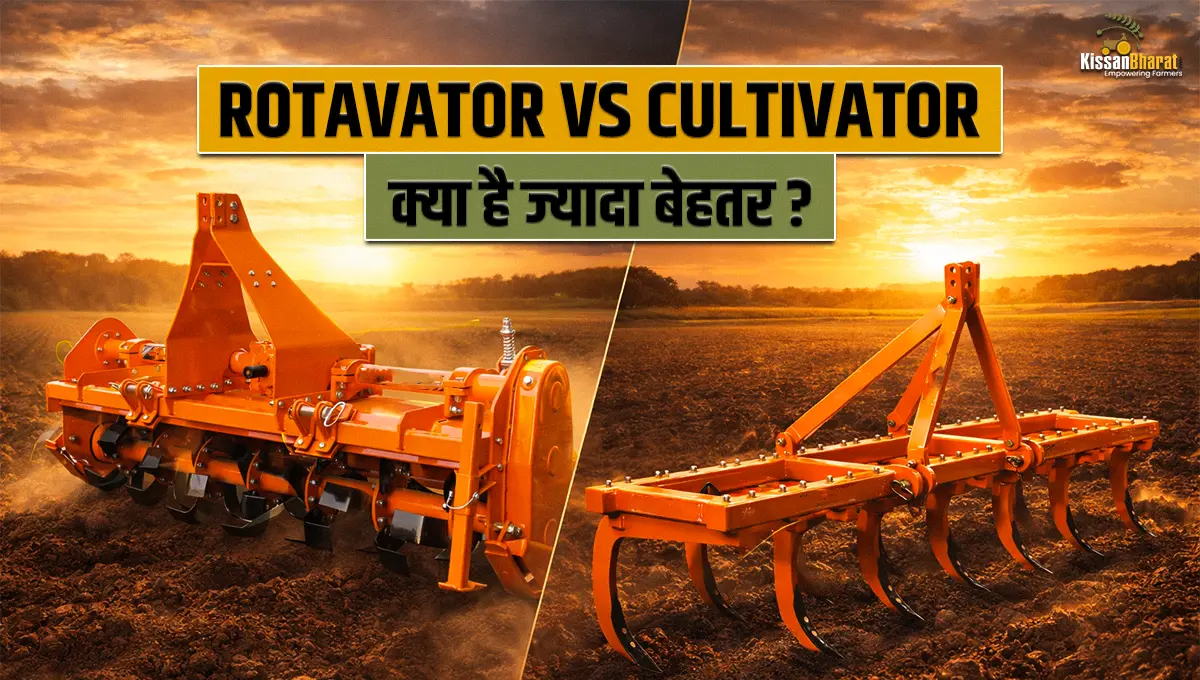
A rotavator is a tractor-mounted implement used for preparing land before sowing. It works with rotating blades powered by the tractor’s PTO (Power Take-Off). These blades cut, break, and mix the soil to create a fine and uniform seedbed.
One of the biggest advantages of a rotavator is its ability to break soil clods and mix crop residues into the upper soil layer. This can help improve soil texture and support the decomposition of organic matter.
Rotavators are especially useful when farmers need quick and efficient land preparation. They can reduce the number of field passes required and save both time and labour. Farmers can also compare different rotavator implements available on Kissan Bharat based on their farming requirements.
What Is a Cultivator?
A cultivator is another essential farm implement used for soil loosening, field preparation, and weed management. It typically uses tines or shovels that penetrate and disturb the soil without pulverizing it in the same way as a rotavator.
The primary function of a cultivator is to loosen compacted soil, improve aeration, and uproot weeds. This can support better root development and improve growing conditions for crops.
Cultivators are useful for different stages of farming, including pre-sowing field preparation and intercultural operations, depending on the crop and implement type. Farmers can explore available cultivator models and compare their specifications before choosing the right option.
Difference Between Rotavator and Cultivator
The main difference between a rotavator and a cultivator lies in their working mechanism, soil disturbance, and purpose.
A rotavator uses PTO-driven rotating blades to break and pulverize soil while mixing crop residue. This makes it useful for preparing a fine seedbed before sowing. A cultivator, on the other hand, uses tines or shovels to loosen and stir the soil, making it suitable for cultivation, soil aeration, and weed control.
Another important difference is the type of operation. A rotavator is generally preferred when thorough soil pulverization and seedbed preparation are required. A cultivator is often used for loosening soil, breaking surface compaction, and managing weeds with comparatively less soil disturbance.
Both implements serve different purposes, and the right choice depends on soil conditions, crop requirements, tractor compatibility, and the stage of farming.
For a wider overview of available machinery, farmers can browse farm implements on Kissan Bharat.
Benefits of a Rotavator for Agriculture Farming
Rotavators offer several advantages for modern farming operations.
One of the biggest benefits is time efficiency. The rotating blades can break soil clods and prepare the field in fewer passes compared with some traditional methods.
Rotavators also help mix crop residues into the soil, creating a more uniform field surface and preparing a suitable seedbed for sowing.
Additional benefits include:
- Faster land preparation
- Reduced labour requirements
- Fine seedbed preparation
- Better mixing of crop residues
- Improved soil pulverization
- Reduced number of field passes
When selecting a rotavator, farmers should match the implement with their tractor's PTO power, field size, and soil conditions to achieve efficient performance.
Benefits of a Cultivator for Farmers
Cultivators are highly useful for soil loosening and weed management. Their tines can disturb the upper soil layer, improve aeration, and help uproot unwanted weeds.
They can also help break surface compaction and improve water infiltration, creating better conditions for root development.
Some key benefits of using a cultivator include:
- Effective soil loosening
- Improved soil aeration
- Weed management
- Lower power requirements compared with some PTO-driven implements
- Simple operation and maintenance
- Suitable for different stages of field preparation
For example, farmers looking for an implement designed for shallow cultivation and weed control can check options such as the Duckfoot Cultivator on Kissan Bharat.
Rotavator vs Cultivator: Which One Should You Choose?
The choice between a rotavator and a cultivator depends on the type of farming operation you need to perform.
Choose a rotavator if your priority is:
- Preparing a fine seedbed
- Breaking and pulverizing soil
- Mixing crop residues
- Completing land preparation quickly
- Using a PTO-driven implement for intensive soil preparation
Choose a cultivator if your priority is:
- Loosening the soil
- Improving soil aeration
- Managing weeds
- Performing shallow cultivation
- Carrying out intercultural operations
In many cases, farmers may use both implements at different stages of the farming cycle. The rotavator can be used for intensive seedbed preparation, while the cultivator can support soil loosening and weed management.
It is also important to select a tractor with sufficient power and compatibility for the chosen implement. Farmers can compare different tractor models and specifications on Kissan Bharat to find equipment suitable for their farming needs.
Conclusion
Choosing between a rotavator vs cultivator ultimately depends on the specific requirements of the farm, soil conditions, crop type, and stage of the farming process.
A rotavator is generally better suited for intensive soil preparation and creating a fine seedbed before sowing. A cultivator is useful for loosening soil, improving aeration, and managing weeds during different cultivation stages.
Both are valuable farm implements, and understanding their functions can help farmers make smarter machinery decisions and improve overall field productivity. Before making a purchase, it is important to compare implement specifications, tractor compatibility, and farming requirements to select the most suitable equipment.
For more information on tractors, farm implements, and agricultural machinery, farmers can explore the available equipment and resources on Kissan Bharat.