
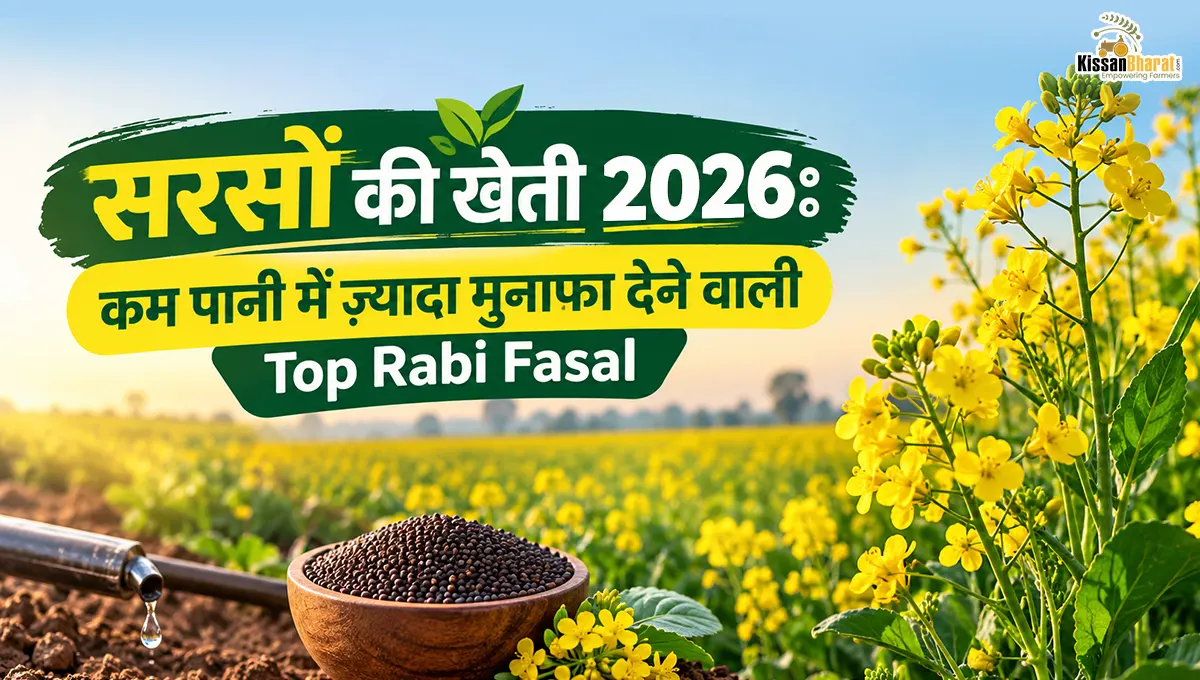
गेहूँ Rabi का king है, लेकिन सरसों (Mustard) उसकी सबसे profitable companion है। सिर्फ 2 irrigations, 110–140 दिन में harvest, गेहूँ से कम input cost, और 2026 में ₹6,000+ प्रति quintal का market price, सरसों India की second most important oilseed crop है जो Rajasthan, Haryana, UP और MP में लाखों किसानों की Rabi income का मुख्य source है।
2026 में mustard acreage में 5–7% बढ़ोतरी की उम्मीद है, government की MSP support policy और edible oil import कम करने के लक्ष्य की वजह से। सही variety, सही timing और सही fertilizer management से एक एकड़ सरसों से ₹30,000–55,000 तक net income संभव है।
इस guide में जानें, कब बोएं, कौन सी variety चुनें, कितना fertilizer लगाए, और सरसों में सबसे ज़्यादा नुकसान करने वाले Aphid को कैसे control करें।
Rabi Season 2026-27: गेहूँ और सरसों की बुवाई से पहले खेत कैसे तैयार करें
सरसों क्यों चुनें: 5 Strong Reasons
1. कम पानी में ज़्यादा income: गेहूँ में 6 irrigations, सरसों में सिर्फ 2। पानी की कमी वाले areas — Rajasthan, Haryana के dry zones — में सरसों most suitable Rabi crop है।
2. कम input cost: सरसों में seed rate बहुत कम (1.5–2 kg/acre), nitrogen requirement गेहूँ से कम, और pest management simpler है।
3. MSP guarantee + premium market: Rabi 2026-27 के लिए सरसों का MSP ₹5,950/quintal से ऊपर है। Market में quality sарसों ₹6,000–7,500/quintal तक बिकती है। Organic certified सरसों ₹8,000–12,000/quintal तक।
4. Edible oil demand: India edible oil का बड़ा importer है — government domestic mustard production को aggressive support दे रही है। NAFED procurement active है।
5. Dual income — seed + straw + honey: Mustard के पौधे excellent bee fodder हैं — beekeeping के साथ extra ₹5,000–10,000/acre income। Straw fodder के रूप में बिकती है।
Soil और Climate: सरसों को क्या चाहिए
Soil:
- Sandy loam से loam soil — ideal
- pH: 6.0–7.5
- Waterlogging absolutely नहीं चाहिए — even एक दिन का waterlogging crop को damage करता है
- Well-drained और aerated soil ज़रूरी
Temperature:
- Germination के लिए: 18–25°C — October की temperature ideal
- Vegetative growth: 10–25°C
- Flowering पर cold spell चाहिए — north India की October–November climate perfect
Soil Health Card से सरसों के लिए pH और nutrients check करें
State-wise सही Sowing Time: Deadline याद रखें
|
|
|
|
|
|
|
|
|
|
|
|
|
|
|
|
|
|
|
|
|
|
|
|
|
|
|
|
|
|
|
|
|
|
|
⚠️ October 25 के बाद बुवाई से 10–15% yield penalty लगती है और late crop में Aphid का attack भी बहुत ज़्यादा होता है। सरसों में timing गेहूँ से भी ज़्यादा critical है।
2026 की Top Mustard Varieties: ICAR Recommendations
Pusa Mustard-32: Paddy के बाद Best Choice
ICAR-IARI, New Delhi द्वारा develop की गई Pusa Mustard-32 इस season का star variety है।
Key specs:
- Sowing period: Last week of September – October 15
- Average yield: 27–28 quintal/hectare (10–11 q/acre)
- Early maturity — paddy harvest के बाद तुरंत बोएं, wheat से पहले harvest हो जाती है
- Disease resistant — Alternaria blight और White rust resistant
Special quality: Paddy-wheat rotation में perfect fit — paddy काटो, सरसों बोओ, गेहूँ से पहले काटो। Land use efficiency maximum।
Best for: Punjab, Haryana, Western UP — जहाँ paddy-wheat rotation हो।
PM-25 (Pusa Mustard-25) — High Oil Content Champion
ICAR-IARI developed Assam field experiments में 24–30% higher grain yield.
Key specs:
- Average yield: 14.7 q/ha — potential ज़्यादा
- Oil content: 39.6% — quality oil के लिए excellent
- Maturity: 107 days — सबसे short duration varieties में
- Harvest index 10–11% higher than local varieties
Special quality: 107 दिन में ready — गेहूँ की timely sowing के लिए enough time मिलता है। Early harvest से next crop की timing perfect रहती है।
Best for: All North India — Assam, NE states, UP, Haryana — जहाँ early harvest ज़रूरी हो।
RH-749 (RH 0749): Rajasthan-Haryana का Trusted Choice
Key specs:
- Average yield: 6–8 q/acre (irrigated conditions)
- Oil content: 40% — high quality oil
- Seeds: Bold, high pod density
- Suitable zones: Haryana, Punjab, Delhi, Jammu और North Rajasthan
Special quality: Bold seeds — threshing easy, market में better price। High oil percentage से mustard oil value ज़्यादा।
Best for: Haryana, Punjab, North Rajasthan — irrigated conditions।
Pusa Bold (NPJ-93): सबसे Widely Grown Variety
India में सबसे ज़्यादा बोई जाने वाली mustard variety।
Key specs:
- Yield: 6–9 q/acre (7–9 q/acre irrigated)
- Duration: 110–115 days
- Oil content: 37–40%
- Drought tolerance: Moderate salinity tolerate करती है
- Suitable: UP, Rajasthan — wide adaptability
Best for: UP, Rajasthan — reliable और proven। First-time mustard farmers के लिए safest choice।
Pusa Mustard-28 (NPJ-124): High Oil Content
Key specs:
- Yield: 19.93 q/ha
- Oil content: 41.5% — highest oil content varieties में
- Maturity: 107 days — short duration
Best for: Irrigated conditions जहाँ oil content priority हो।
JMM-527 और JM-1: MP के लिए Specific
Madhya Pradesh conditions के लिए ICAR-recommended varieties।
Best for: MP और Central India — local conditions optimized।
Variety Selection Quick Guide
|
|
|
|
|
|
|
|
|
|
|
|
|
|
|
|
|
|
|
|
|
|
|
|
Seed Rate और Seed Treatment
Seed Rate:
- Normal varieties: 1.5–2 kg/acre (3.75–5 kg/hectare)
- Bold seeded/hybrid types: 2–2.5 kg/acre
- Row-to-row spacing: 45–50 cm
- Plant-to-plant: 15–20 cm (thinning के बाद)
Seed Treatment:
|
|
|
|
|
|
|
|
|
|
|
|
|
|
|
|
|
|
|
|
Fertilizer: सरसों में Sulphur सबसे ज़रूरी है
सरसों एक Sulphur-loving crop है — Sulphur की कमी से oil content और yield दोनों गिरती है।
ICAR recommended dose (per hectare):
|
|
|
|
|
|
|
|
|
|
|
|
|
|
|
|
|
|
|
|
|
|
|
|
Application schedule:
- Basal (बुवाई के समय): पूरा P, K, S, Zinc + आधा N
- Top dressing (Branching stage — 30 DAS): बाकी आधा N (Urea)
Rabi Fertilizer — Urea, DAP और NPK का complete guide
Irrigation
सरसों की सबसे बड़ी खूबी है कि सिर्फ 2 irrigations में excellent crop होती है, लेकिन timing गलत हो तो yield 30–40% कम हो जाती है।
2 Critical Irrigations:
|
|
|
|
|
|
|
|
|
|
|
|
|
|
|
Pre-sowing irrigation (Palewa): बुवाई से पहले एक light irrigation—germination uniform होती है। Sandy soil में यह ज़रूरी है।
Drip Irrigation Subsidy 2026 — सरसों के लिए PMKSY से 55–90% subsidy
Aphid: सरसों का सबसे बड़ा दुश्मन
Mustard Aphid (Lipaphis erysimi) सरसों की सबसे destructive pest है. January–February में temperature बढ़ने पर explosion होता है और एक हफ्ते में पूरी crop destroy हो सकती है।
पहचान: छोटे green/yellow insects पत्तियों और pods के पीछे colonies में। Honeydew से चिपचिपे leaves।
Economic Threshold Level (ETL): 20–25 aphids प्रति plant — इससे ज़्यादा हो तो तुरंत action।
Control:
|
|
|
|
|
|
|
|
|
|
|
|
|
|
|
|
|
|
|
|
|
|
|
|
💡 Aphid spray early morning या evening में करें, बीच का दिन avoid करें। Honeybees pollination करती हैं, दोपहर में spray से bees को नुकसान होता है।
Harvesting: सही समय पर काटें, नहीं तो shattering
कटाई के signs:
- 75–80% pods golden-brown हो जाएं
- Seeds hard और dark हो जाएं
- Grain moisture: 35–40% पर कटाई करें — इससे ज़्यादा सूखने पर shattering होती है
कटाई method:
- Reaper या manual sickle से
- Early morning में काटें — dew में pods कम shatter होती हैं
- काटने के बाद 3–4 दिन field में dry करें, फिर threshing करें
Profit Calculation: एक एकड़ में कितना मुनाफा?
|
|
|
|
|
|
|
|
|
|
|
|
|
|
|
|
|
|
|
|
|
Income:
- Average yield: 8–10 q/acre
- Market price @ ₹6,000/q: ₹48,000–60,000
- Net Profit: ₹30,000–48,500/acre
Organic certified + beekeeping income = ₹10,000–15,000 extra।
निष्कर्ष
सरसों 2026 में Rabi season का सबसे underrated high-profit crop है, कम पानी, कम input cost, और government MSP support। Pusa Mustard-32 paddy के बाद ideal है, RH-749 Haryana-Rajasthan का proven choice है, और Pusa Bold all-India reliable option। October 20 से पहले बुवाई करें, Sulphur ज़रूर डालें, और Aphid पर ETL-based timely action करें।
गेहूँ के साथ सरसों की mixed farming में total Rabi income 40–60% बढ़ सकती है। KCC loan से Rabi inputs finance करें और Soil Health Card से मिट्टी check करके exact fertilizer dose तय करें