
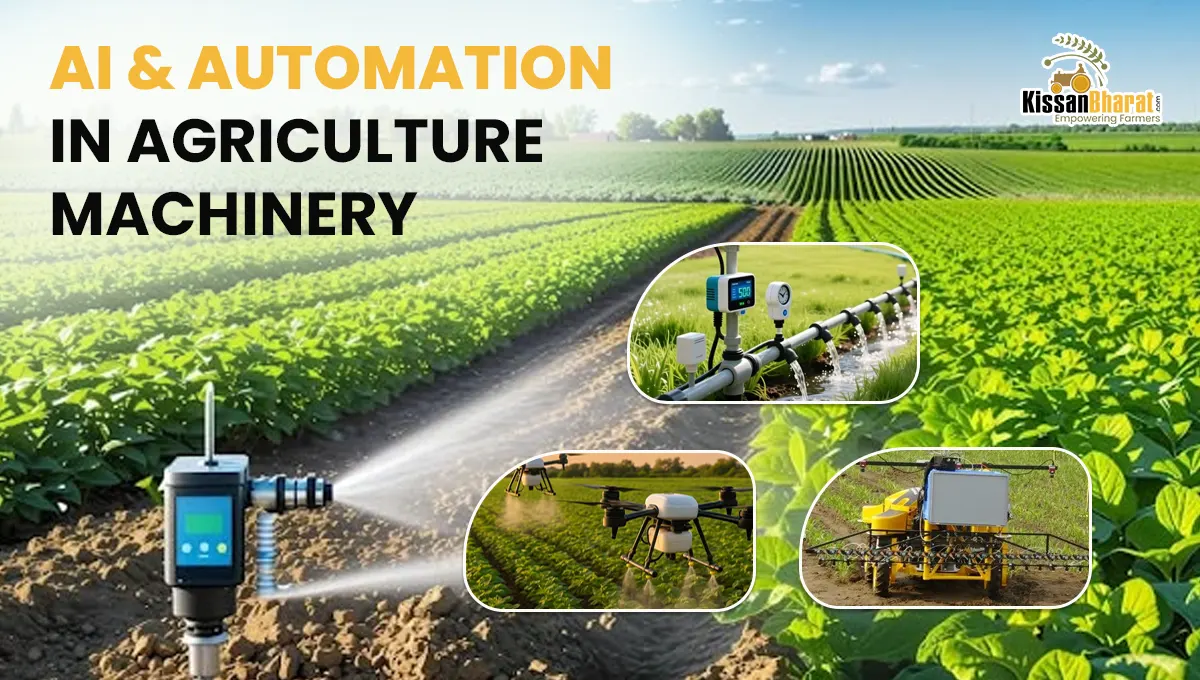
Agriculture is evolving into an era where the machine does not remain only mechanical but becomes intelligent through the use of AI in agriculture and agricultural automation technology. Automation and robotics are changing the way in which the farmer plans, plants, monitors, and harvests crops.
AI in agriculture is assisting in labor independence and better decision-making by farmers, while farm automation technology is improving the efficiency and preciseness of farming operations. This article will take a deep dive into the changes happening in agriculture through automation and robotic technology.
What is AI & Automation in Agriculture?
AI in Agriculture is a term used to describe the artificial intelligence system that is used to analyze data, make predictions, and help make farming decisions. Agricultural automation is a machine or a system that performs farming processes with little human intervention.
Together, they form an efficient farming ecosystem.
AI in farming enables farmers to make better use of their resources, while farm automation technology allows for fast and precise completion of agricultural processes.
How AI is Transforming Farming Operations
1. Smart Crop Monitoring
AI systems employ the use of sensors, satellites, and drones to track crop growth in real-time.
Advantages:
- Early identification of disease
- Effective crop management
- Decreased losses
One of the biggest impacts of AI on agriculture.
2. Precision Farming
The AI uses soil analysis, weather patterns, and crop information to suggest exact farming activities.
Advantages:
- Effective fertilizers usage
- Decreased water wastage
- Increased efficiency
Precision systems constitute an important aspect of agriculture automation.
3. Automated Irrigation Systems
Smart irrigation uses AI to control water supply based on soil moisture and weather forecasts.
Advantages:
- Water conservation
- Lower operational cost
- Better crop yield
4. Robotic Farming Equipment
There are robotic devices used for farming activities such as planting, weeding and harvesting without any human assistance.
Advantages:
- Decrease dependence on labor
- Faster processes
- Very accurate
Robots are increasingly being used in agriculture.
5. AI-Based Pest Detection
The use of AI to detect pests and diseases in an early stage with the help of image recognition and prediction analysis is possible.
Advantages:
- Quick response time
- Minimal crop damage
- Less pesticide application
6. Autonomous Tractors and Machines
The latest trend in automation of agriculture involves self-driving tractors and machines.
Benefits:
- Precision fieldwork
- Fuel conservation
- Increased efficiency
These innovations are making farming smarter and more scalable.
Benefits of AI in Agriculture
The adoption of AI in agriculture brings several major benefits.
It improves decision-making by analyzing real-time data from soil, weather, and crops. This leads to better planning and higher productivity.
Agricultural automation also reduces dependency on manual labor, which is especially important in large-scale farming.
Another key benefit is resource efficiency. AI ensures optimal use of water, fertilizers, and pesticides, reducing waste and cost.
Overall, AI is making farming more efficient and profitable.
Challenges of AI & Automation in Farming
Although AI in farming provides several advantages, there are still certain difficulties associated with using AI in agriculture.
First, the capital cost remains high, which prevents many small farmers from using AI.
Another problem associated with the use of this technology is technical proficiency.
The lack of connectivity in rural areas may also impact the functioning of smart systems.
But considering the growing financial assistance from the government and improvements in technology, automation technology in farms will definitely become more affordable.
AI-based systems function optimally alongside other modern agricultural technologies. Read our complete blog here: https://kissanbharat.com/news/smart-farming-equipment-every-progressive-farmer-should-use
Conclusion
The rise of AI in agriculture and agricultural automation marks a major shift in how farming is done today. From robotic farming to smart irrigation systems, technology is making agriculture more efficient, sustainable, and productive.
As farm automation technology continues to evolve, farmers who adopt these innovations early will benefit the most in terms of yield and cost savings. The future of farming is clearly data-driven, automated, and intelligent.