
.webp)
August 2026 में कई राज्यों में मानसून उम्मीद से कम रहा है। Rajasthan, Gujarat, Haryana, और Maharashtra के कुछ ज़िलों में बारिश का बड़ा deficit है। Paddy, Cotton और Soybean, जो फसलें ज़्यादा पानी माँगती हैं, उनमें yield loss की आशंका है। लेकिन यह वह वक्त है जब सही decision लेने वाला किसान नुकसान को अवसर में बदल सकता है।
IMD के 2026 forecast में El Niño signals के कारण Northwest India में below-normal rainfall की warning पहले ही थी। अब जब यह reality बन रही है तो जवाब एक ही है: दलहन (Pulses) और Millets की तरफ shift करें। यह फसलें न सिर्फ कम पानी में survive करती हैं, बल्कि 2026 MSP में इन्हें highest margins भी मिले हैं।
Monsoon 2026 IMD Forecast और Kharif की पूरी तैयारी — यहाँ पढ़ें
कम बारिश में किसान के सामने असली challenge क्या है?
कम बारिश का मतलब सिर्फ पानी की कमी नहीं, यह एक chain reaction है:
- Paddy में transplanting fail — seedlings dry होती हैं
- Cotton में boll development रुकता है — yield 30–50% गिरती है
- Soybean में pod filling poor होती है
- Groundnut में kernel development कम होता है
- और सबसे बड़ा risk — heavy-water crops में investment डूबना
लेकिन दलहन और millets में:
- Bajra 200–350 mm बारिश में survive करता है
- Moong 60–65 दिन में तैयार — जो बारिश हुई उसी में
- Jowar deep roots से subsoil moisture use करता है
- Tur/Arhar drought tolerant है और लंबे समय तक wait कर सकती है
कम बारिश में कौन सी फसलें Best हैं: Quick Guide
|
|
|
|
|
|
|
|
|
|
|
|
|
|
|
|
|
|
|
|
|
|
|
|
|
|
|
|
|
|
|
|
|
|
|
|
|
|
|
|
|
|
|
|
|
|
|
|
Kharif MSP 2026-27 — सभी 14 फसलों का नया भाव यहाँ देखें
दलहन (Pulses) क्यों चुनें
1. सबसे कम पानी, सबसे ज़्यादा margin
Moong में 61% margin over production cost — Kharif की सभी 14 फसलों में सबसे ज़्यादा। और Moong को सिर्फ 250–350 mm बारिश चाहिए। यानी जहाँ paddy fail हो रहा है, वहाँ Moong अच्छी yield दे सकता है।
2. Nitrogen Fixation — अगले season की मिट्टी बेहतर होती है
दलहन की जड़ों में Rhizobium bacteria nitrogen fix करते हैं। एक season में Moong या Urad से 30–40 kg N/hectare soil में add होता है — यह अगले season का fertilizer cost बचाता है।
3. 60–65 दिन में income — कोई लंबा इंतज़ार नहीं
Moong और Urad — दोनों 60–65 दिन में harvest। अगर अभी August में बोएं तो October में मंडी में। 60–90 दिन में income देने वाली फसलें — पूरी list यहाँ देखें।
4. Government Support — NAFED procurement guarantee
Pulses में NAFED actively procurement करती है जब market price MSP से नीचे जाए। यह safety net paddy में FCI जितनी ही strong है।
5. Intercropping में income double करें
Arhar + Moong, Arhar + Urad — यह combinations kam baarish में भी work करते हैं। Intercropping से income कैसे double करें — यहाँ पढ़ें।
Millets (Shree Anna) क्यों चुनें — 2026 में सबसे बड़ा opportunity
Government ने Millets को "Shree Anna" declare किया है और इनकी global demand तेज़ी से बढ़ रही है। कम बारिश में Millets सबसे resilient option हैं।
Bajra (Pearl Millet) — Drought का सबसे बड़ा warrior
Bajra 200 mm जितनी कम बारिश में भी survive करता है। Sandy और loam soil में अच्छा। Rajasthan, Haryana, Gujarat, UP — हर जगह proven।
Recommended Varieties:
- HHB 67 Improved: 75 दिन, downy mildew resistant — Rajasthan best
- Proagro 9444 / Pioneer P1449: High-yield hybrids
- GHB 558: Gujarat में popular
MSP 2026: ₹2,900/quintal — 56% margin। Yield 20–30 quintal/acre।
Jowar (Sorghum) — Deep roots से moisture खींचता है
Jowar की roots 2 मीटर गहरी होती हैं — subsoil moisture use करता है। Dual purpose: grain + fodder। Marathwada, Vidarbha, Telangana में traditional rainfed crop।
Recommended Varieties:
- CSH 16: 110 दिन, high yield hybrid
- M 35-1 (Maldandi): Open pollinated, Marathwada की जान
- SPV 669: Stay-green — fodder के साथ grain
MSP 2026: ₹4,023/quintal (Hybrid), ₹4,046 (Maldandi)।
Ragi (Finger Millet) — South India का most nutritious millet
Karnataka, Andhra, Tamil Nadu, Odisha — Ragi traditional crop है। 500–750 mm में ठीक लेकिन उससे कम में भी survive करती है।
Recommended Varieties:
- GPU 28: High yield, blast resistant
- MR 6: Short duration — 90 दिन
MSP 2026: ₹5,205/quintal।
State-wise Shift Strategy: आपके राज्य में क्या करें?
|
|
|
|
|
|
|
|
|
|
|
|
|
|
|
|
|
|
|
|
|
|
|
|
|
|
|
|
|
|
|
|
|
|
|
|
Varieties चुनते वक्त यह ध्यान रखें
कम बारिश में variety selection में 3 चीज़ें priority होनी चाहिए:
Drought Tolerance: ICAR-approved drought tolerant varieties जैसे HHB 67 Improved (Bajra), GPU 28 (Ragi), Pusa Vishal (Moong) चुनें।
Short Duration: 60–90 दिन की varieties — जो भी बारिश बची हो, उसमें complete हो जाएं।
Disease Resistance: Kम baarish में भी fungal diseases आती हैं — resistant varieties नुकसान कम करती हैं।
Soil Health Card से मिट्टी की जाँच करें — सही fertilizer plan बनाएं
Seed Treatment: कम बारिश में और भी ज़रूरी है
कम moisture में seed germination challenge होती है। Seed treatment से germination rate 15–20% बेहतर होती है:
- Fungicide: Thiram @ 3 gm/kg seed — damping off से बचाव
- Rhizobium culture: Pulses के लिए mandatory — nitrogen fixation
- PSB (Phosphate Solubilizing Bacteria): Phosphorus uptake improve करता है
- Hydrogel coating: कुछ states में available — moisture retention
Water Conservation: जो बारिश हुई उसे बचाएं
कम बारिश में जो पानी मिला उसे conserve करना उतना ही ज़रूरी है जितना सही फसल चुनना।
Field level:
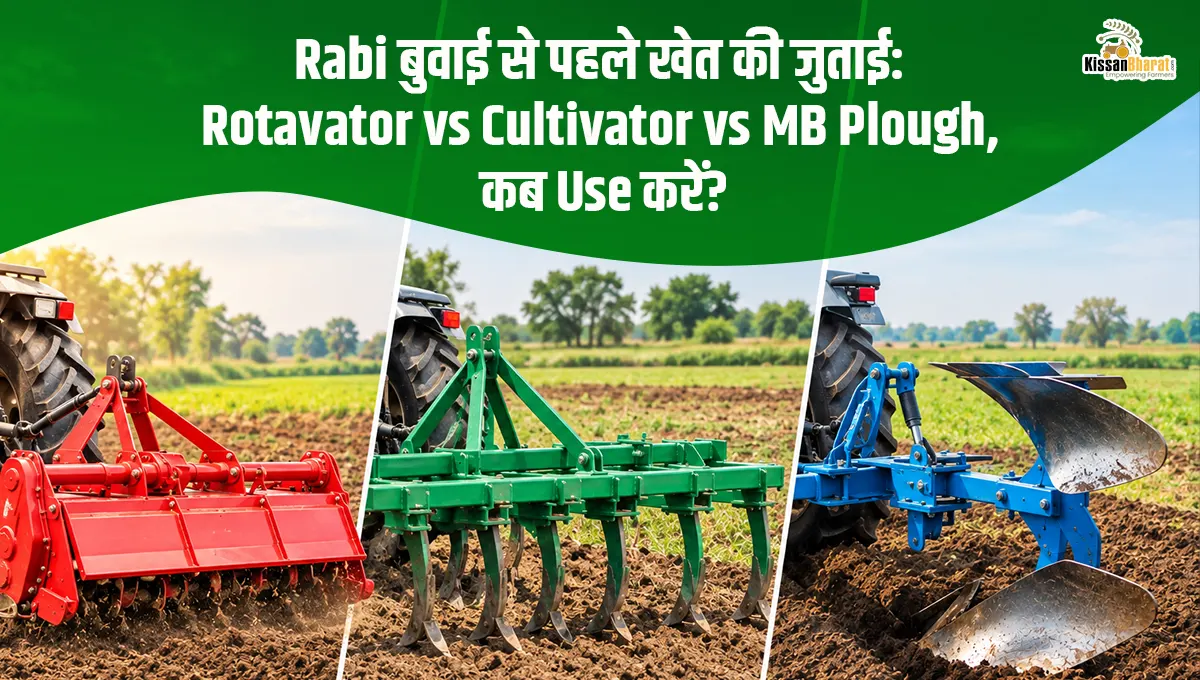
- Rotavator से deep ploughing — rainwater infiltration बढ़ती है
- Mulching — soil moisture evaporation 30–40% कम होती है
- Seed Drill से furrow sowing — moisture zone में seed placement
Irrigation:
- जहाँ groundwater available हो — drip irrigation से targeted watering। Drip Irrigation Subsidy 2026 — 55–90% तक subsidy के साथ apply करें।
- Solar Pump से irrigation cost कम करें।
Fertilizer: कम बारिश में dose adjust करें
कम बारिश में full dose fertilizer डालना waste है, nutrients uptake होती ही नहीं।
Rule: Rainfall 50% कम हो तो N dose भी 25–30% कम करें। P और K basal में दें — यह soil में stable रहते हैं।
Pulses में fertilizer वैसे भी कम चाहिए — Rhizobium treatment हो तो nitrogen practically zero।
Kharif में Urea, DAP और NPK — कब, कितना और कैसे डालें
Government Support — Dalhan और Millets के लिए क्या मिल रहा है?
MSP Guarantee:
- Moong, Urad, Arhar — NAFED actively procures। Kharif MSP 2026-27 — complete list यहाँ
- Bajra और Jowar — State procurement + NAFED
PKVY (Organic Farming):
- Millets और Pulses को organic certify करने पर ₹31,500/hectare government support। Organic farming guide यहाँ।
KCC Loan:
- New crop के लिए working capital — 4% effective rate। KCC 2026 — पूरी जानकारी यहाँ।
निष्कर्ष
कम बारिश एक natural disaster है, लेकिन सही crop shift से यह manageable हो सकता है। Moong और Urad: 60 दिन में income, 61% MSP margin, कम पानी। Bajra और Jowar: drought champion, nutritious, export demand बढ़ रही है। Arhar/Tur: लंबी फसल लेकिन drought tolerant — और ₹450 की बड़ी MSP hike।
अगले season में ऐसी situation न आए इसके लिए — Soil Health Card से मिट्टी को मज़बूत करें, Drip Irrigation से water-efficient farming करें, और Organic farming से input cost कम करें। अभी के लिए — Kisan Helpline 1800-180-1551 पर call करें और अपने ज़िले का Drought Contingency Plan जानें।